
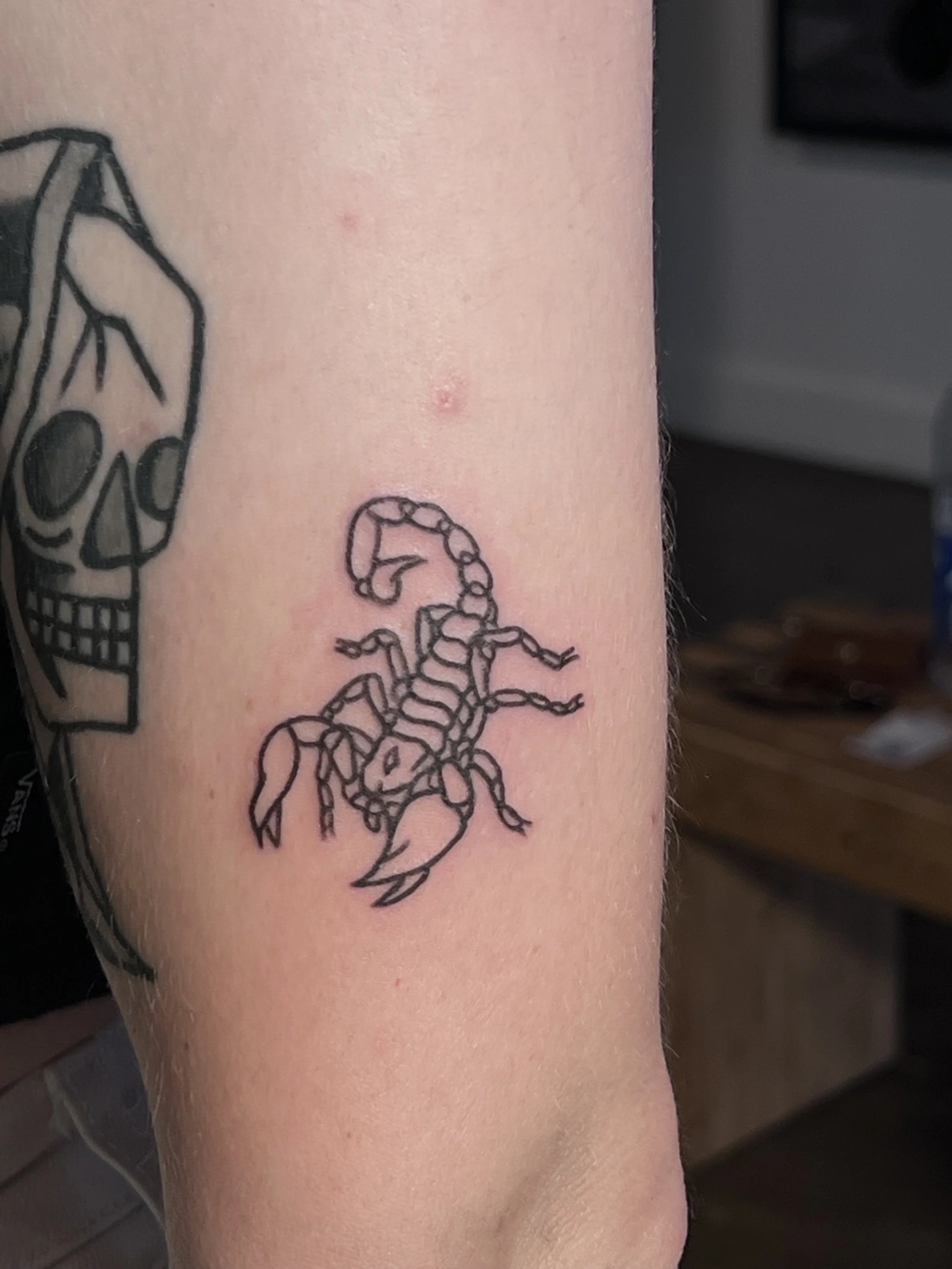
You’ve figured out what tattoo you want. Excellent.
Now comes the surprisingly difficult question:
Where should you put it?
Tattoo placement can affect everything from how a design looks on your body to how much it hurts, how easily you can hide it, and even how well certain details hold up over time.
The good news? There usually isn’t one “correct” answer.
Here’s what to consider when deciding where to put your next tattoo.
What Is the Best Placement for a Tattoo?
The best tattoo placement depends on five main things:
The size of your tattoo
The shape of the design
How visible you want it to be
Your comfort level with tattoo pain
How the design works with the natural shape of your body
A great tattoo artist can help you balance all five.
Sometimes moving a design just an inch or two—or making it slightly larger—can dramatically improve the final tattoo.
Arm Tattoos: A Great Place to Start
There’s a reason arms are one of the most popular places to get tattooed.
The upper arm and forearm provide relatively large, versatile areas for tattoo designs, and they work with a huge range of styles.
Forearms are especially good for designs you want to see regularly, while the upper arm gives you more flexibility if you'd occasionally like to cover your tattoo.
Arms also provide room to add more tattoos later.
That innocent little forearm tattoo has a funny way of eventually becoming, “Well, I guess we’re doing the whole arm.”
It happens.
Wrist and Ankle Tattoos
Wrist and ankle tattoos work particularly well for smaller designs.
Simple florals, symbols, lettering and fine-line designs can all work beautifully in these areas.
Because there’s less space available, however, the design may need to be simplified.
Trying to squeeze too much detail into a tiny tattoo can make it difficult to read and may affect how it looks as it ages.
Small doesn't always have to mean microscopic.
Rib Tattoos
Ribs provide a beautiful canvas, particularly for designs with a vertical or flowing shape.
Florals, botanical pieces, script and illustrative tattoos can follow the natural contours of the body particularly well here.
There is one small catch:
Ribs have a reputation for being a spicier place to get tattooed.
Pain tolerance varies enormously from person to person, but if this is your first tattoo, it's worth discussing the placement and expected session length with your artist beforehand.
Shoulder Tattoos
Shoulders are incredibly versatile.
The rounded shape of the shoulder works especially well for designs that have movement or can wrap naturally around the body.
Shoulder tattoos can also easily expand into larger pieces later, including upper-arm tattoos, chest pieces or full sleeves.
If you think you may eventually want more tattoos in the same area, tell your artist. They can help position the first tattoo so you're not accidentally painting yourself into a very permanent corner.
Back Tattoos
The back gives tattoo artists something they love: space.
Larger illustrative work, symmetrical designs and highly detailed custom tattoos can all benefit from having more room.
Of course, you won't see your back tattoo every time you look in the mirror.
For some people that's a drawback.
For others, it's exactly the point.
Hand and Finger Tattoos
Hand and finger tattoos are highly visible and can look fantastic, but they deserve some extra consideration.
Your hands experience constant movement, washing, friction and sun exposure. Tattoos in these areas can sometimes require additional maintenance or touch-ups compared with tattoos in more protected areas.
They’re also very difficult to hide.
Before getting your hands or fingers tattooed, talk with an experienced artist about how your particular design is likely to work and age in that location.
Does Tattoo Placement Affect Pain?
Yes—but pain is highly subjective.
Areas with more padding tend to be easier for many people, while areas close to bone or with thinner skin can feel more intense.
Generally, the ribs, sternum, feet, ankles, knees, elbows and certain areas of the inner arm have reputations for being more sensitive.
But here's the important part:
Don't choose a tattoo placement you don't really want solely because you're worried about pain.
The tattoo lasts much longer than the appointment.
Does Placement Affect How a Tattoo Ages?
It can.
Areas that receive significant sunlight, friction or frequent movement may age differently from more protected areas.
Your artist may also recommend adjusting the size or detail of a design depending on placement.
Tiny details need enough room to remain readable as the tattoo settles and ages.
This is one of the reasons it's worth listening when your artist says, “I'd make that a little bigger.”
They're not necessarily trying to sell you more tattoo.
They're thinking about what the tattoo will look like years from now.
Should My Tattoo Face Me or Face Outward?
This comes up constantly.
For tattoos on areas like the wrist or forearm, some people want the design oriented so it looks correct when they look down at it.
Others prefer it oriented so it appears upright to everyone else when their arm is resting naturally.
Traditionally, artists often recommend orienting tattoos in relation to the body rather than the viewer.
But ultimately?
It's your tattoo.
Talk through the options with your artist before the stencil goes on.
What If I'm Still Not Sure Where to Put My Tattoo?
That's exactly what consultations are for.
You don't need to arrive knowing the precise size, placement and orientation of your tattoo.
Bring your idea.
Your artist can help you determine how large it should be, where it will sit naturally on your body, and whether the design should be adjusted for that location.
At Birdie's Tattoo in East Nashville, we think that conversation is part of making a great tattoo—not an inconvenience before getting to the “real” part.
Try the Stencil Before You Commit
One of the best things about tattoo stencils is that they're temporary.
Look at the placement from different angles.
Check it in the mirror.
Stand naturally.
Move around.
Take a photo.
And if something doesn't feel right, say something.
Moving a stencil takes a few minutes.
Moving a tattoo is considerably more complicated.
A professional tattoo artist would much rather reposition a stencil three times than give you a tattoo you wish were two inches to the left.
The Bottom Line
Choosing where to put a tattoo is part aesthetics, part practicality and part personal preference.
Consider the size and shape of your design, visibility, pain tolerance, future tattoos, and how the artwork interacts with your body.
And don't feel like you have to figure it all out yourself.
A good tattoo artist can help you find the placement where your idea works best.
Looking for a Tattoo Artist in Nashville?
Birdie's Tattoo is a welcoming, modern tattoo studio located in East Nashville. Our artists work with clients to create custom tattoos and help with everything from the initial idea to size, placement and final design.
Have an idea but no clue where to put it?
Perfect.
Book a consultation with Birdie's Tattoo and let's figure it out together.